A Smart Home Starter Plan Without Overcomplicating It
A smart home does not need dozens of devices or a complicated control room. Begin with one repeated task, solve it reliably and expand only when the first automation genuinely helps.
Start with lighting or power
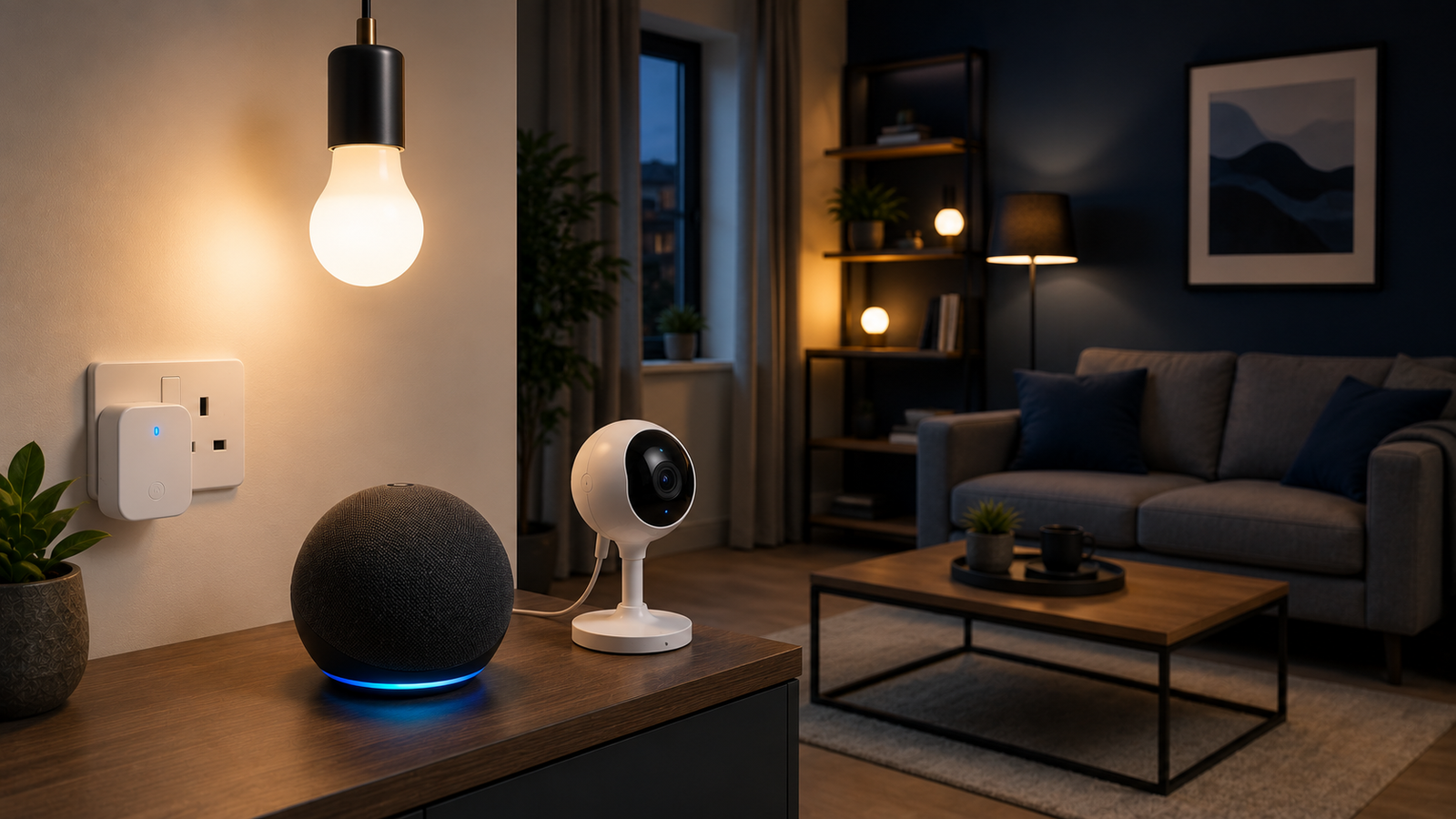
Smart plugs and bulbs are approachable because their benefit is easy to measure. Schedule a lamp, switch off standby equipment or control a difficult-to-reach socket without rewiring the room.
Choose one ecosystem where possible
Mixing platforms can work, but it often creates several apps and inconsistent routines. Check compatibility with the voice assistant or mobile platform already used in the household.
Do not automate a safety-critical action blindly
Heating equipment, cooking appliances and devices with moving parts require particular care. Follow manufacturer instructions and never use a smart plug beyond its rated load.
Give devices clear names
Names such as “Living Room Floor Lamp” are easier to control than “Plug 3”. A consistent naming system also makes future troubleshooting much faster.
Protect the network
Use a strong Wi-Fi password, enable automatic firmware updates where available and remove devices that are no longer used. Avoid exposing cameras or control panels directly to the public internet.
Build routines around people
A useful evening routine might dim a lamp and switch off non-essential sockets. It should still allow manual control so guests and family members are not locked into an app.
The smartest home is not the most automated one. It is the home where technology quietly removes a repeated inconvenience.