Indoor Security Camera Placement: Better Coverage With More Privacy
An indoor camera can help monitor an entrance, pet area or vulnerable room, but placement should balance useful coverage with the privacy of everyone in the home.
Define the purpose first
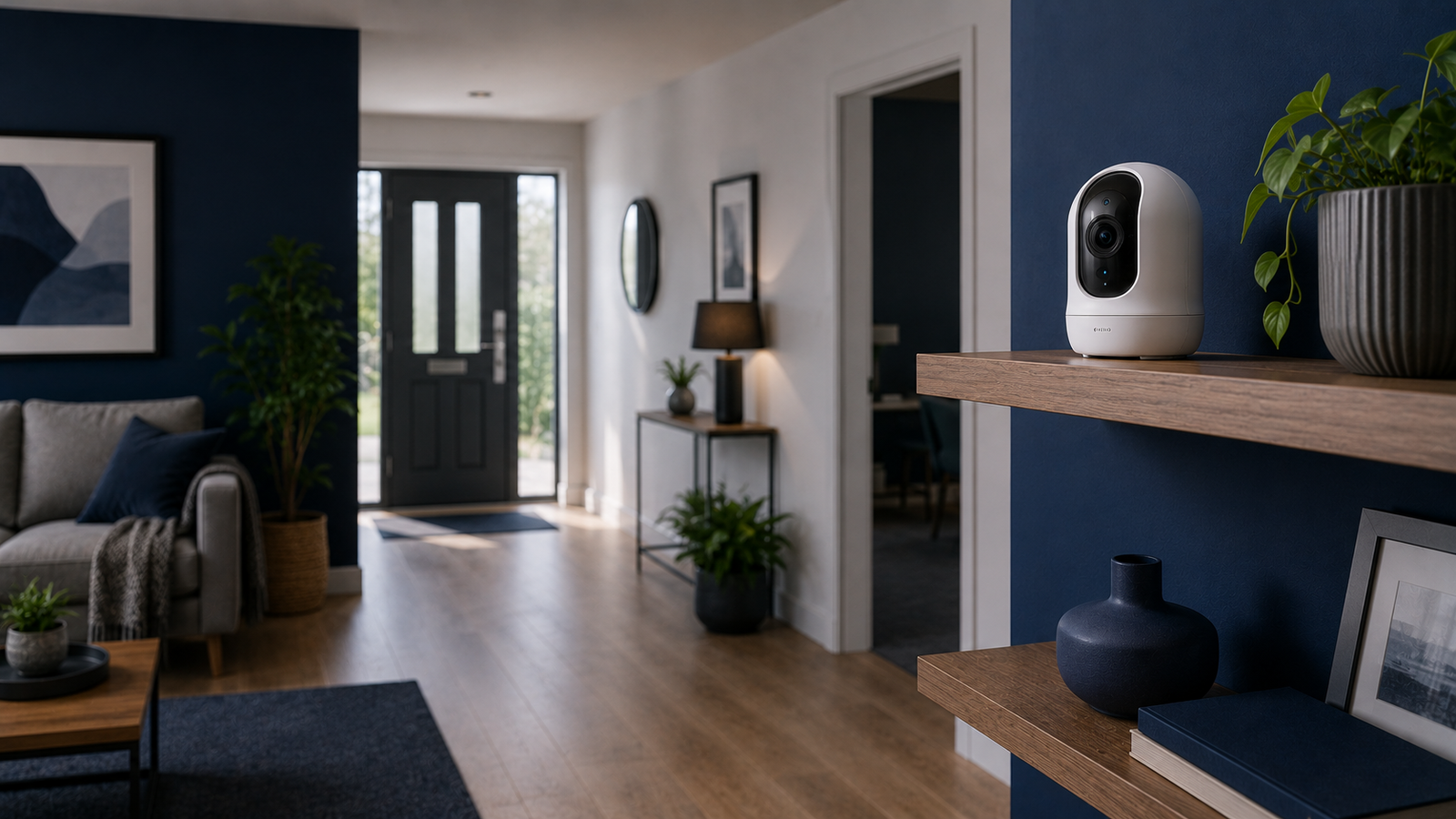
A camera intended to monitor a front entrance needs a different angle from one used to check on a pet. Decide what event you need to see before choosing the mounting position.
Place cameras high, but not blindly
A higher position reduces tampering and can widen the field of view. Avoid pointing directly at bright windows, which may leave indoor subjects in silhouette.
Respect private spaces
Do not place cameras in bedrooms, bathrooms or other areas where people reasonably expect privacy. Tell household members and visitors where monitoring is active.
Test notifications before relying on them
Motion alerts can become useless if every moving shadow creates a notification. Configure activity zones and sensitivity, then test during daylight and at night.
Secure the account
Use a unique password and multi-factor authentication where supported. Keep firmware and the companion app updated, and review which users have access.
Plan for internet interruptions
Cloud-dependent features may stop when broadband is unavailable. Where local storage is important, confirm support for a memory card or local hub and understand how recordings are overwritten.
Good security coverage begins with a clear purpose and ends with responsible access control.