Car Charger Buying Guide: USB-C PD, Multi-Port Power and Real Compatibility
A car charger may look simple, but output, port sharing and vehicle fit determine whether it can keep modern devices powered during navigation, calls and long journeys.
USB-C Power Delivery
USB-C PD is useful for compatible phones, tablets and some laptops. The device negotiates the power it can accept, so a higher-capacity charger does not force excessive power into a properly designed compatible device.
Multi-port output
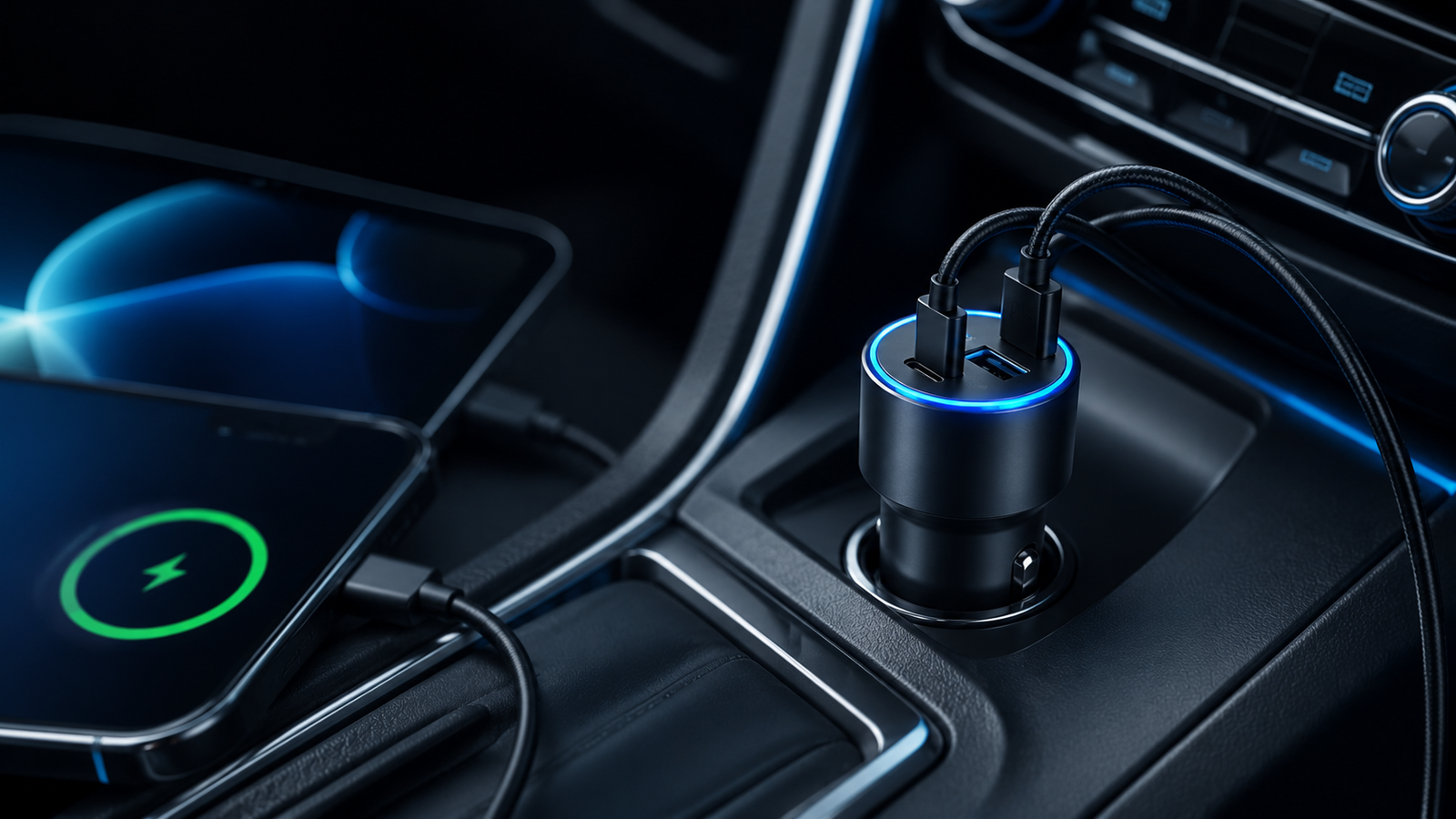
Two ports are convenient for passengers, but the total power may be divided when both are used. Read the allocation details rather than assuming each port supplies the full headline output simultaneously.
Check the socket fit
A charger should sit firmly without disconnecting on bumps. Oversized designs may obstruct nearby controls or cup holders in some vehicles.
Cable choice still matters
Use a cable rated for the intended charging level. Replace cables with damaged insulation, bent connectors or unreliable contact.
Prevent unnecessary drain
Some vehicle sockets remain powered after the engine is switched off. Remove accessories when leaving the vehicle for extended periods, especially where the car manual recommends it.
Think beyond the phone
A multi-port charger can support a passenger’s device, a dash camera or travel accessory, but avoid exceeding the ratings of the vehicle socket and charger.
Choose a car charger by its supported standards and shared output, not by the number of ports alone.